A Self-Hosted AI Agent for Finance Operations
Built a company-wide operations platform for 200+ users and deployed a self-hosted Llama agent over the financial data, so management could ask the business a question in plain English and get an answer in seconds. Reconciliation time fell 60%, and 12+ hours of manual reporting went away each week.
- Role
- Project Lead, Operations Infrastructure & AI
- Organisation
- Pomina Steel Group
- Location
- Ho Chi Minh City, Vietnam
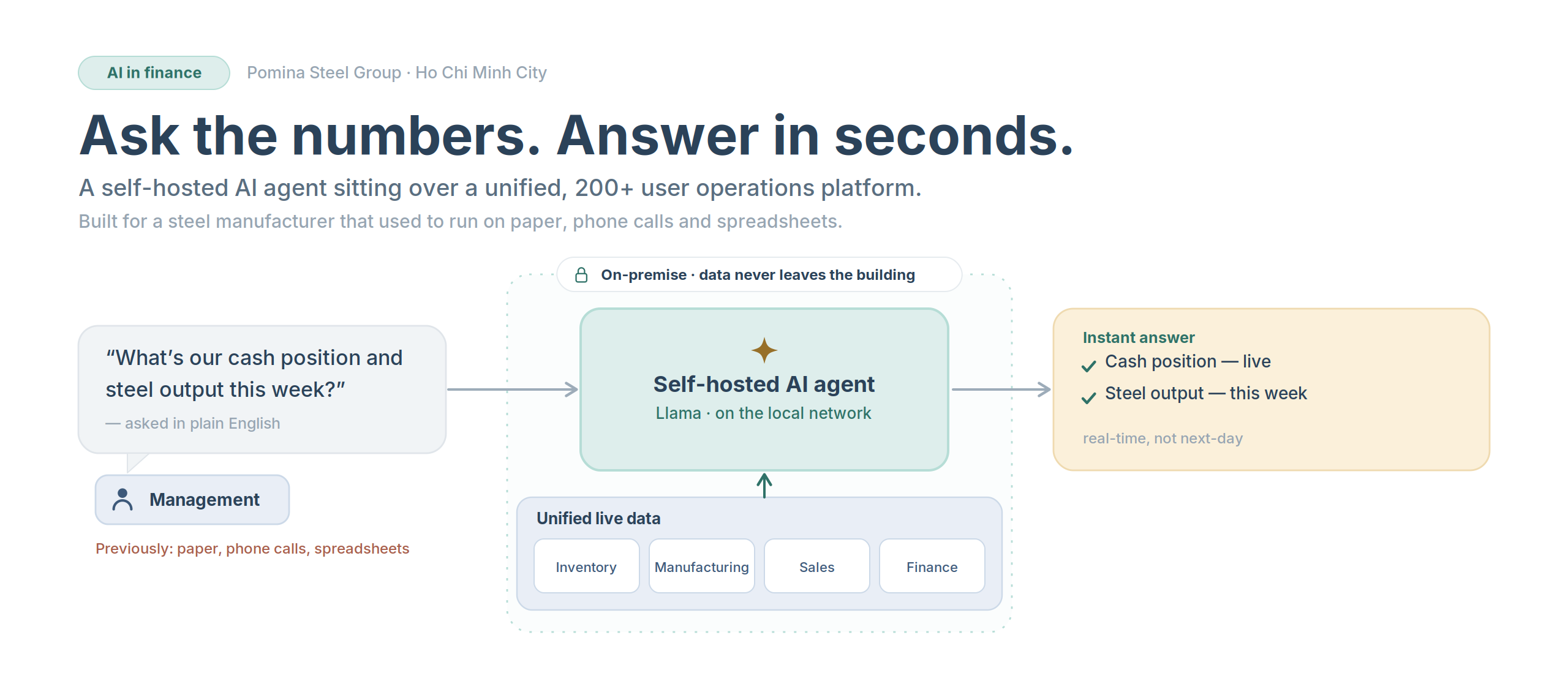
Restructuring a business is hard when nobody trusts the numbers in real time. After the refinancing, Pomina was still running on spreadsheets and paper approvals, so I led the build of the operating system underneath the company, then put an AI agent on top of the data. This is the story of how a heavy-industry steel maker went from chasing figures by phone to simply asking for them.
The problem
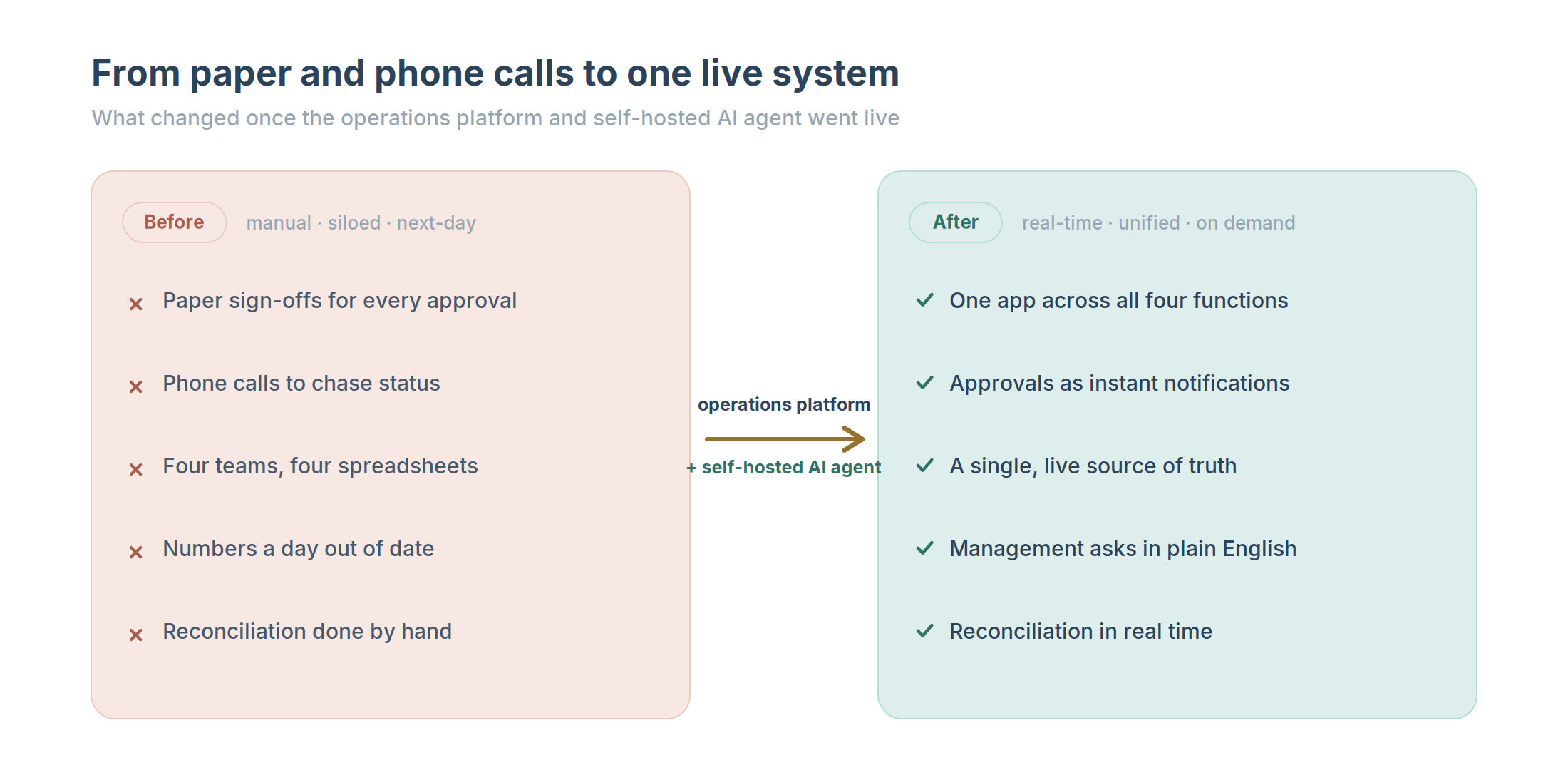
Inventory, manufacturing, sales and finance each kept their own records. Reconciling them was slow, manual, and always a little out of date, which is exactly what makes a capital decision risky. An approval meant a paper sign-off; a status check meant a phone call; a report meant someone re-keying numbers that were already a day old.
The brief I set was simple to say and hard to do: one live picture of the business that everyone shares, and a way for management to ask it questions directly.
How I framed it
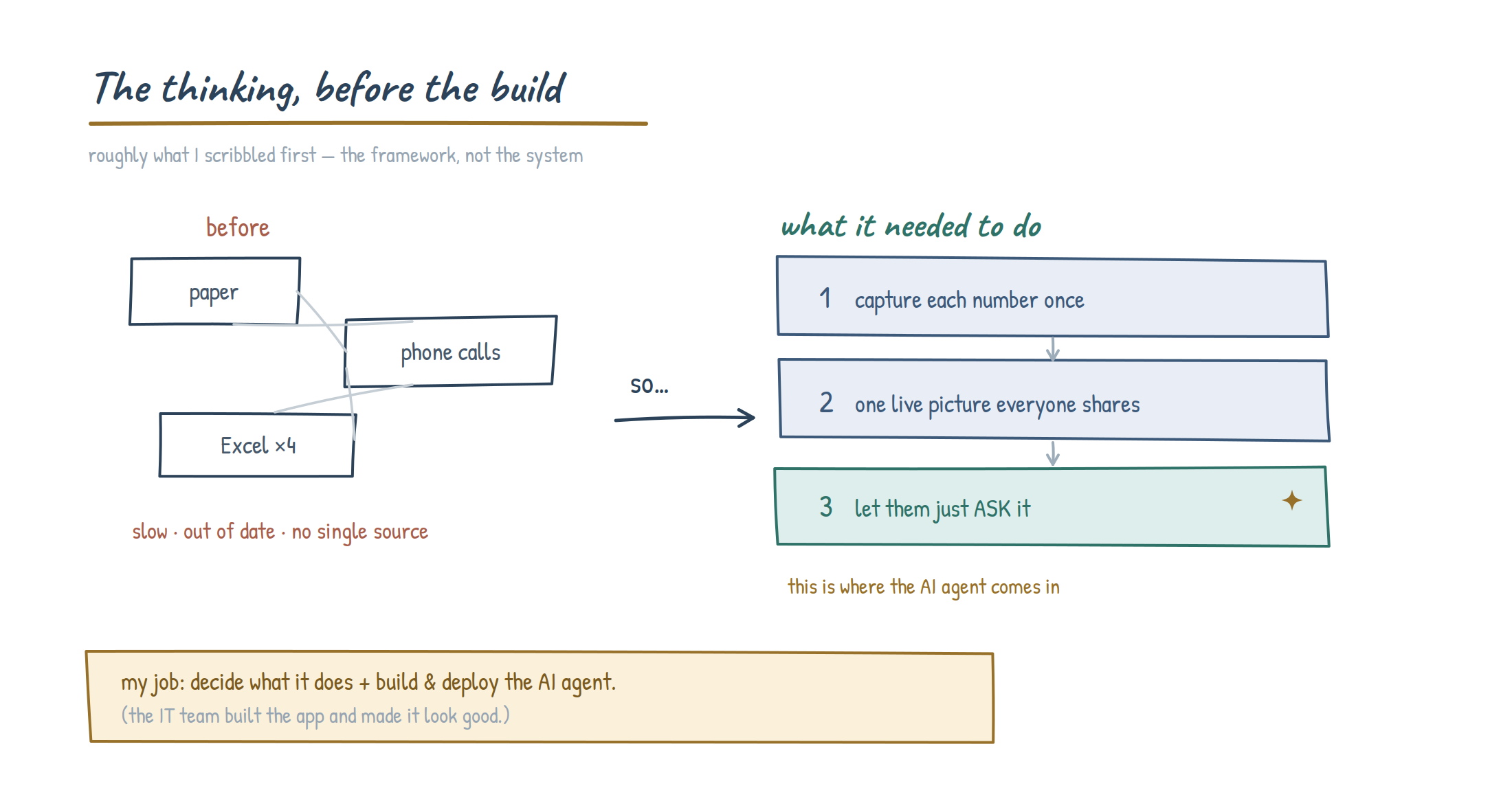
Before any code, I sketched the framework. Three principles did most of the work: capture each number once instead of re-typing it across teams; hold it all in one live picture everyone shares; and let the people who run the business simply ask it, rather than wait for a report.
That third principle is where the AI agent comes in, but it only works if the first two are right. My job was to define what the system had to do, decide how the data should be structured, and build and deploy the AI layer. The IT team built the app itself and the interface on top of my spec.
How it's put together
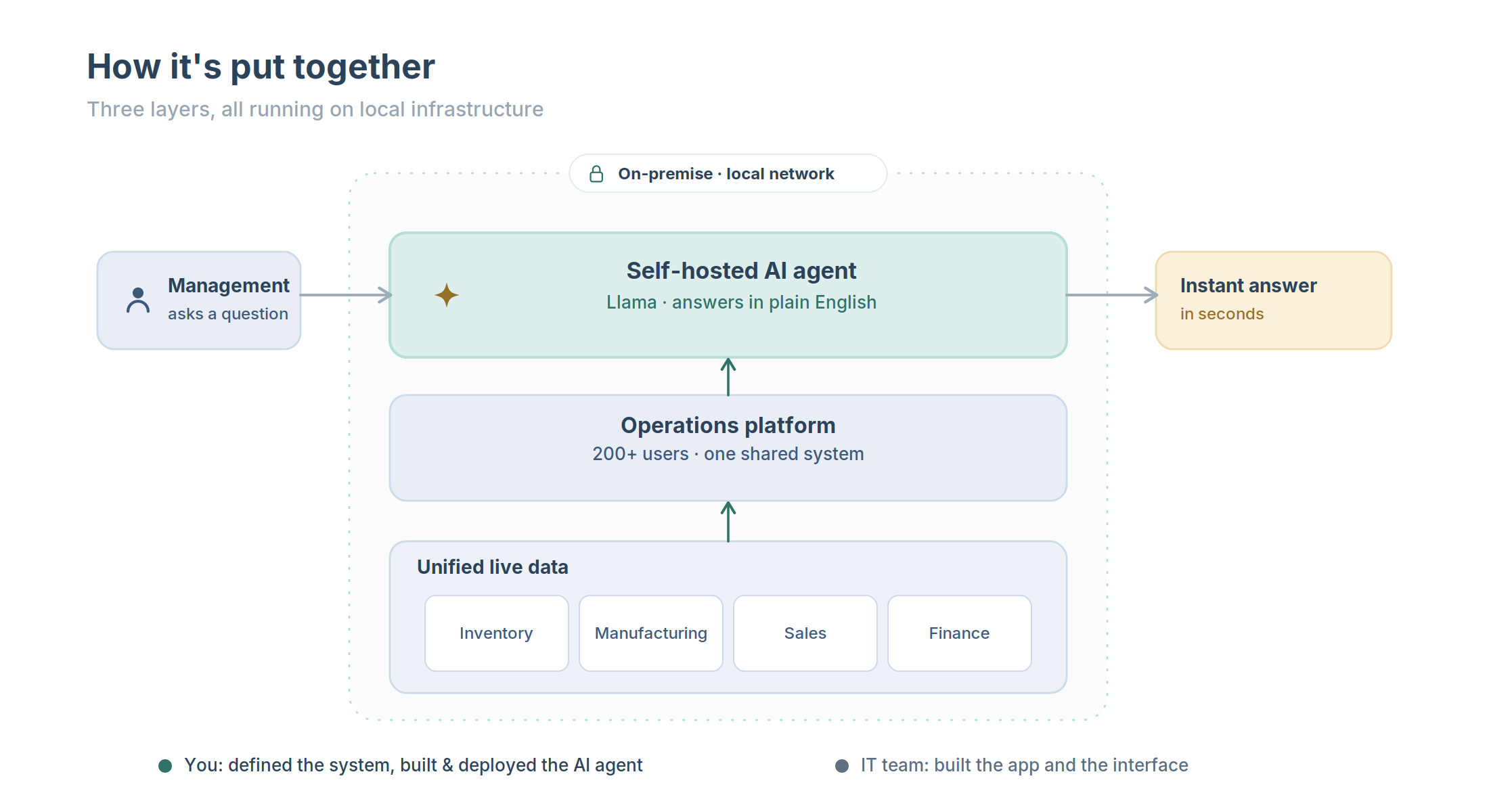
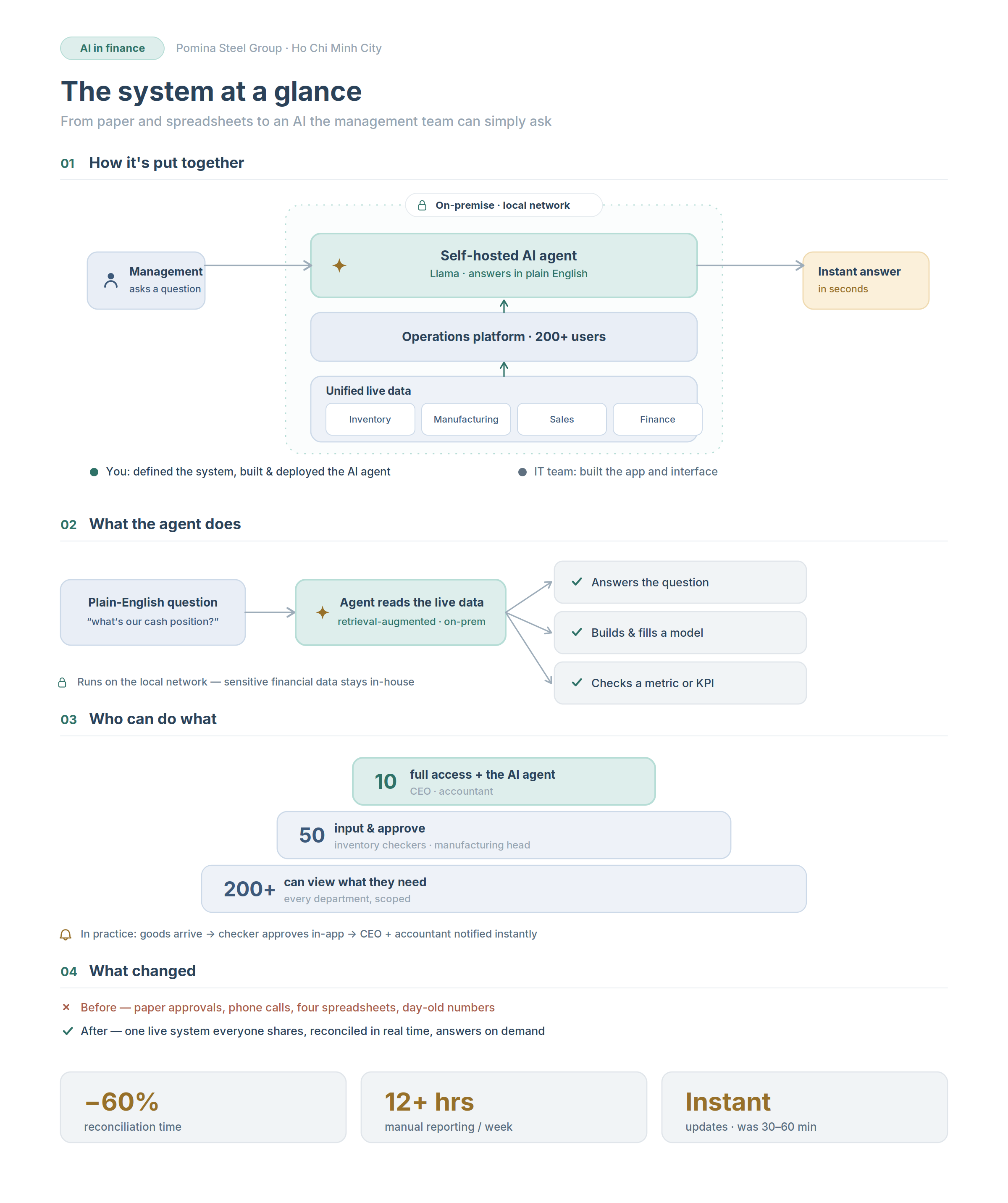
The system is three layers, and all of them run on local infrastructure. At the bottom is the unified data: inventory, manufacturing, sales and finance, captured once and kept current. On top of that sits the operations platform, the app the 200+ users actually touch, where approvals happen and notifications fire in real time. And on top of that sits the self-hosted AI agent, which reads the live data and answers in plain language.
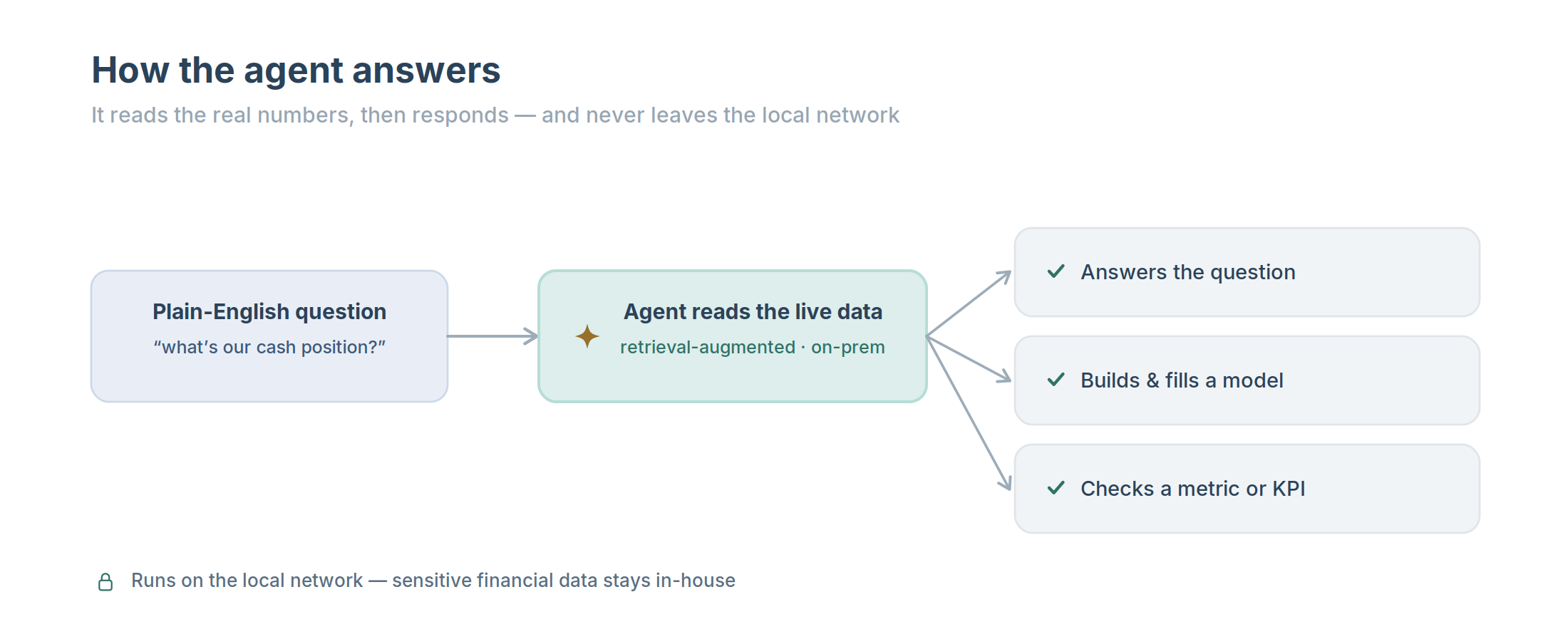
Self-hosting was the point. For a finance team, an AI assistant is only useful if the sensitive data never leaves the building, so the model runs on the company's own network, not a third party's.
How the agent answers
When someone asks a question, the agent doesn't guess, it reads the live data from the platform first, then responds. (In practice that is a retrieval-augmented setup, kept entirely on-premise.) From there it does one of three things: answers the question directly, builds and fills in a model, or checks a specific metric or KPI.
Because the data is already structured and current, the answer is too. There is no waiting a day for someone to assemble it.
Who can use it
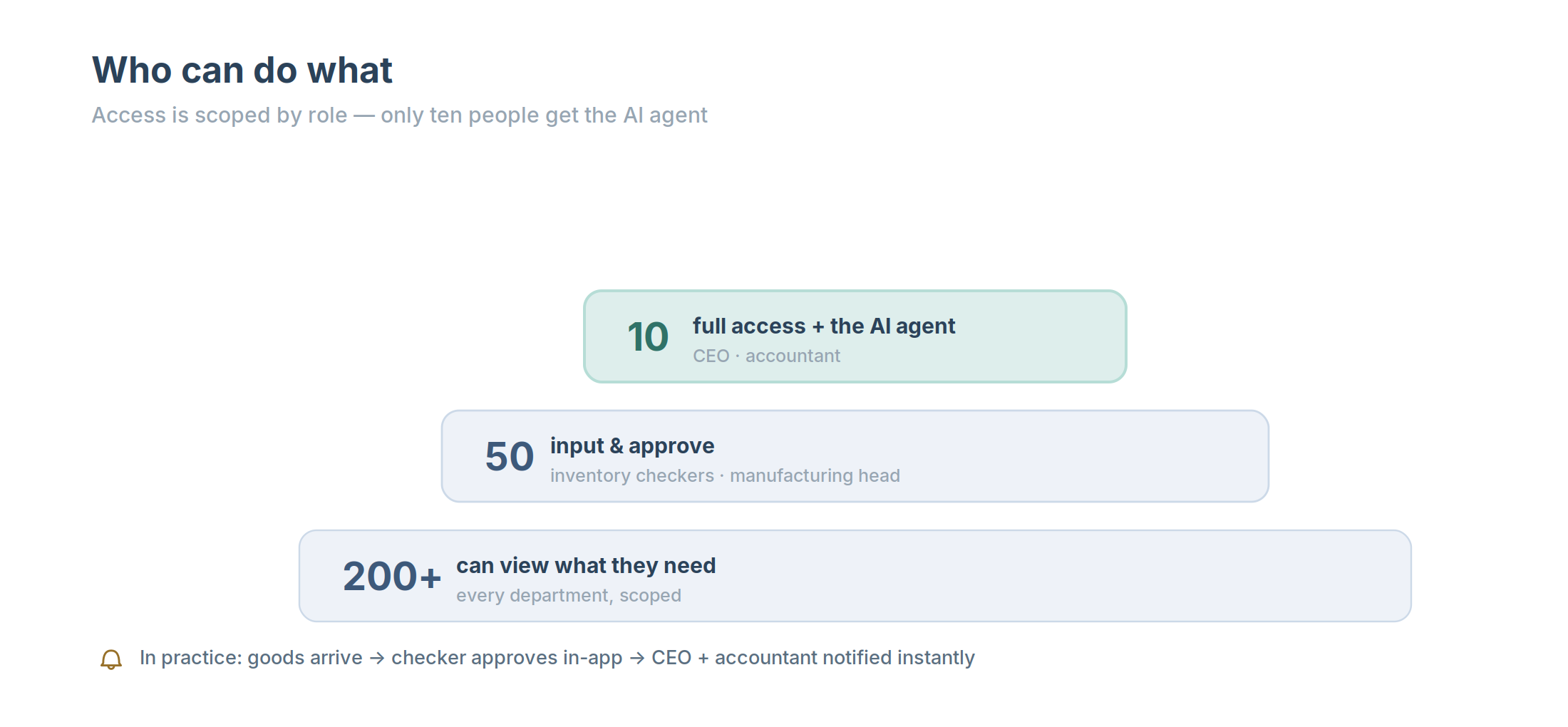
Access is scoped by role. Around 200 people can see what they need for their part of the business; about 50 can input and approve, such as inventory checkers signing off orders and the manufacturing head scheduling output; and only ten people have full access plus the AI agent: the CEO and the accountant.
The everyday payoff is the notification loop. When goods arrive, the checker approves them in the app, and the CEO and accountant are notified instantly, with no paperwork, no phone call, and no waiting.
Results
- Reconciliation time fell by 60%.
- More than 12 hours a week of manual reporting went away.
- Status that used to take 30 to 60 minutes to chase is now instant.
- Approvals moved from paper to real-time notifications across the business.
The whole system, on one page
If it helps to see it all at once, the architecture, what the agent does, who can use it, and what changed, here it is on a single page.
What I took from it
The most useful AI in finance is often not a chatbot on a screen. It is the boring infrastructure underneath: clean data captured once, plus a well-scoped local agent, changed how fast the management team could see and trust their own numbers. Getting the framework right mattered more than the model. The AI was only as good as the single source of truth I put beneath it.